


The Heart of the Beast: The 400

With our car secured, we next set out to find a suitable engine for our ride. If you remember from one of our previous posts, we wanted something we could build - but had to use year appropriate technology. What I meant by this was that we were not doing fuel injection, running turbo or super chargers, etc. We were going naturally aspirated. SO what else did we know? Well, knew we wanted a Pontiac 400 or a 455 block. We didn't want a 350, 403, or any other size. We were also NOT doing an LS conversion. We also knew that we wanted an older block in good condition - meaning it hadn't been bored over, or if it had, it had only been once - ensuring the block still had some life in it.
So before the hunt began, we needed to educate ourselves on the various size engines that went into Pontiac vehicles over the years. By this time we had decided we would do a 400, and that is exactly what we were looking for. But, what 400? We had to dig into info on the blocks to find out what had been made when, and their availability. So naturally, we started combing posts and websites for available blocks. Here is what we learned in doing block research with Wallace Racing:
Pontiac used the same codes on different year blocks. To differentiate them it will have to be determined what year the block is. Next to the distributor hole there is a casting number that has a letter with 2 or 3 numbers. The letter is the month of manufacture- A=Jan. B=Feb, etc.
The next number or two is the day, but sometimes the factory left the first part off, i.e. 5 could mean 5,15,25.The most important is the last number, it is the year of Manufacture it is not always the model year, as most blocks are cast a few months before the car is made. In addition 1966 and earlier blocks had 2 freeze plugs on each side of the block. 1967 and newer had 3 freeze plugs per side.
These blocks had 2 motor mount holes per side. Starting in 1970, most blocks were cast with 5 motor mount holes with the mounts using 2 bolts in line with 1 higher up in the middle. Some 1977 and later blocks only had 3 holes that used the newer mounts. This means you can put a 455 in about any Pontiac car with that car's motor mounts, but if you want to use a 428 block in your 1970- Firebird you'll have to modify the frame mounts or make an adapter.
Starting around 1969 Pontiac cast a 2 digit year number next to the distributor also. They also cast the engine size on the sides of the block, usually in front of the motor mounts or between the freeze plugs.
Around 1968 Pontiac also stamped the VIN numbers next to the timing cover about even with the timing marks on cover. These are usually covered with oil and crud, and probably hard to see. This will tell you if this is an original motor (this information comes from Wallace Racing).
Wallace also had a chart that made looking up engines pretty easy. Their Pontiac engine codes chart really helped keep us on track for what we were looking for. So by using a combination of Wallace's codes chart, and Pontiac block casting numbers that we got from Kens Machine Shop , we were ready to go looking. We ultimately landed on a nice 400 block out of upstate New York. The block code and casting numbers: 9790071 YS. Our block came out of a 1969 Pontiac GTO. From the factory, stock horsepower was 350. Nice.
So as novices buying a block, we thought we did really well. After all, the guy we bought the block from threw in two sets of pistons, two sets of piston rods, and two crankshafts. We both thought that was generous. We later found out that all those parts were damaged and crap. This was a way for him to sell a good block at a decent price and dispose of additional stuff he didn't want to pay to throw away. His solution: SHIP IT TO TEXAS, and have the customer pay for it! Other than that little item, the purchase was perfect. Looking back we probably should have stayed within Texas for our purchase. It would have saved us a mint in shipping fees.
During this time we also did some additional research on the car, now that we had the VIN number, and discovered the following:

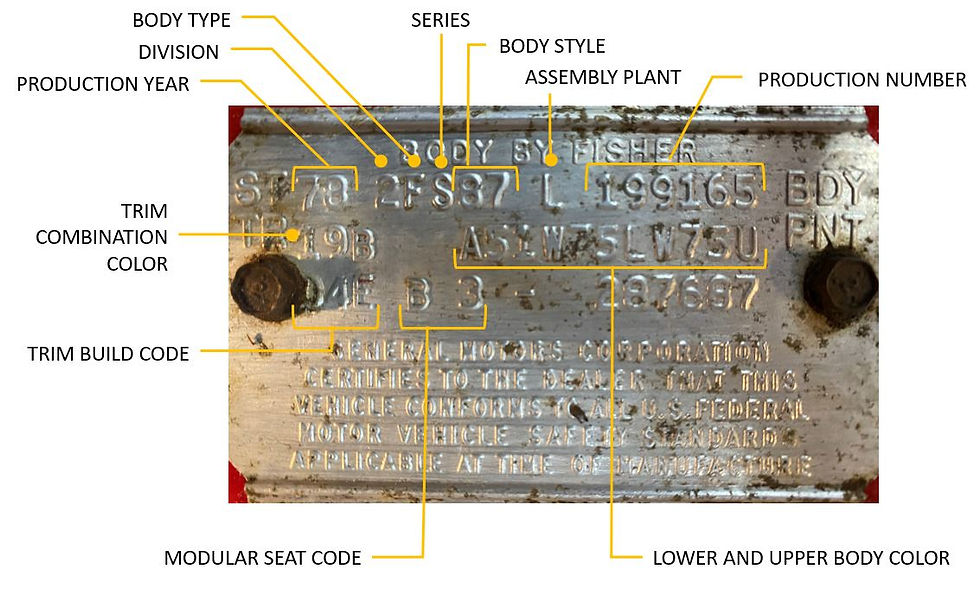
The only item that was a little disconcerting was the original engine code and the build location. The build location being in California is good - means no rust from salt on the street during winter (as those autos built in Detroit may have to contend with). The challenge with California is the engine type. Due to strict EPA regs, you could only get the 403 motor in California. Why all the fuss? The 403 is an Oldsmobile motor, and the set up in the engine bay is a little different than that for a 400. Specifically how the fuel lines are run from the back of he car. Well... we'll get it figured out. Along with the motor mounts.
Oh yeah, I forgot to mention that the motor mounts for the 1969 GTO block are different that those in the engine compartment for the 1978 Trans Am. But that is another post....
Comments